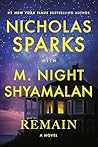
After weeks of labelling, planning, and imagining where my books might travel, I’ve finally released my first three books into the wild through BookCrossing, and I’m so excited to see where they go next.
For those new to the idea, BookCrossing is like a worldwide library-meets-treasure-hunt. You register your book online, add a unique ID label, and then “release” it somewhere public; a park bench, a coffee shop, a train seat, for a stranger to find. If they log it online, you can track its journey across towns, countries, or even continents.
Today, three of my collection started their adventures:
It felt strange walking away, leaving them behind. But there’s a thrill in not knowing who will find them or where they’ll end up. Maybe they’ll stay local… or maybe they’ll be halfway across the world in six months.
If you find one of my books, or release your own, please let me know in the comments! And if you’ve never tried BookCrossing, now’s the perfect time to start. It’s free, fun, and might just make someone’s day.
Currently reading Queen of Shadows by Sarah J. Maas
Sometimes, life feels too loud. Too real. Too heavy. Too… present.
Today, I carved out a few hours just for myself. I ran a hot bath, let the steam curl around me, and sank into another world between the pages. Time stopped mattering. My mind stopped whirring. All that existed was me, the story, and the characters pulling me further from reality with every turn of the page.
When the water cooled, I retreated to bed, book in hand, while a thunderstorm playlist on Spotify whispered in the background.
The sound of rumbling skies and soft rainfall made the perfect backdrop, almost like the book and playlist had conspired to match each other’s mood.
For those few hours, there were no to-do lists, no worries, no anxiety and no noise from the outside world. Just words, weather, and the welcome distraction of a story strong enough to carry me away.
It’s not that reading solves my problems, it just gives me a safe place to set them down for a while.
She was fire, and light, and ash, and embers. She was Aelin Fireheart, and she bowed for no one and nothing, save the crown that was hers by blood and survival and triumph.
Set in thirteenth-century Bruges, this debut novel follows a young woman’s explorations of faith, agency, and love among a community of fiercely independent women.
Aleys is sixteen years old and serious, stubborn, prone to religious visions. She and her only friend, a young scholar, have been learning Latin together in secret—but just as she thinks their connection might become something more, he abandons her for the monastery. When her family falls on hard financial times, her father promises her in marriage to the unctuous head of the weavers’ guild, and in desperation she runs away from home, eventually finding shelter within a community of religious women who do not answer to the church. Among the hardworking and strong-willed Beguines, Aleys glimpses for the first time the joys of a life of song, friendship, and time spent in the markets and along the canals of Bruges. But forces both mystical and political are afoot. Illegal translations of scripture, the women’s independence, and a sudden rash of miracles all draw the attention of an ambitious bishop—and bring Aleys and those around her into ever-increasing danger, a danger that will push Aleys to a new understanding of love and sacrifice. Introducing a spirited, indelible heroine and a major new talent, Canticle is a luminous work of historical fiction, vividly evoking a world on the verge of transformation.
What I thought
Although I’m not religious myself, I’ve always been interested in how people experience belief; What it means to them, how it shapes their lives, and Canticle explores that theme in a way that feels both accessible and deeply human.
Set in 13th-century Bruges, the novel follows Aleys, a determined, intelligent young woman whose visions and strong will set her apart. When she’s promised in marriage to a man she doesn’t love, she runs. Finding refuge with the beguines, a community of independent women who live religious lives outside the authority of the Church.
What I connected with most wasn’t the religious content, but the strength, friendship, and quiet defiance of the women Aleys meets. Their world is one of market stalls, songs, shared work, and moments of real joy. The psalter Aleys reads, full of vibrant, colourful illustrations, becomes a beautiful symbol of both her spiritual questioning and the creative expression that flows beneath the surface of this otherwise constrained society.
The writing is lyrical without being overdone, and the historical detail brings medieval Bruges vividly to life. I found myself caring deeply about the beguine community and the ways they carved out space for themselves in a world that left women with so few options.
By the end, I felt both moved and inspired by the book. The author’s acknowledgments and the story itself left me itching to book a flight to Bruges. Especially to walk through the Begijnhof, absorb the history and imagine the lives of the women who once lived there.
It might just be my next city break!
This is an absorbing, beautifully written story about finding strength, belonging, and purpose. It deserved 5 stars from me, and whilst not naturally a book I would reach for, I’m so glad I did!
Thank you to NetGalley and the publisher for the opportunity to read this early.
Based on a true story, Orpheus Builds a Girl is a novel of sisterly love, sinister obsession, and the battle for control of the story. A dark, chilling debut novel from award-winning writer Heather Parry.
German doctor Wilhelm Von Tore shares with the reader the story of his one true ove; a love written in the stars, decades in the making, a love so strong it transcended death itself. When Wilhelm emigrates to America he carries with him a vision of a dark-haired beauty, presented to him in his dreams by his beloved late Grandmother. In Key West, Florida, a beautiful young woman is taken to him in the grip of illness, and he recognises her immediately as his promised bride. Despite his efforts, the sickness takes hold and his beloved slips away from him. But Wilhelm will not be kept from his destiny, not even by death. Using research compiled over decades, he sets about attempting to restore his love to her body, so that they might be together forever.
But there’s another voice in this story: Gabriela, and she will not let this version of events go unchallenged. From between the cracks in Wilhelm’s story Gabriela recounts her own memory of her sister Luciana, a fiery and difficult young woman, and the madman who robbed her from her grave.
What I thought
I’m always drawn to books based on real-life events, and Orpheus Builds a Girl didn’t disappoint. Heather Parry has created something truly chilling and unique. The writing is sharp, haunting, and at times even poetic, pulling you deep into a story that’s as macabre as it is fascinating.
The novel is told through two interwoven narratives. One is from Dr. Wilhelm, a fictionalised version of Carl Tanzler, a man consumed by obsession and control, whose voice becomes increasingly disturbing as the story unfolds. The other comes from Gabriella, the sister of Luciana, the woman at the centre of his obsession. Gabriella’s voice brings heartbreak, clarity, and a fierce sense of protection over Luci, offering a vital counterbalance to Wilhelm’s delusion.
The alternating voices throughout kept the tension high and gave the story a layered, unsettling intimacy. It also sent me straight down a rabbit hole afterwards, reading up on Carl Tanzler and the bizarre true story behind the novel. I always find fiction rooted in real events more compelling, and this is a brilliant example of how to do it well.
If you’re into gothic fiction, morally grey characters, or stories that explore obsession and control in deeply uncomfortable ways, I’d definitely recommend this. It wasn’t an easy read emotionally, but it was absolutely worth it.
Creepy, atmospheric, and thought-provoking. A solid 4 stars from me.
Most people have been devoured by the eldritch creatures, but Sara and her family have been fighting for survival, armed with their knowledge of folklore and pagan rituals – the only weapon that seems to work against these monsters.
And then a young woman, Parsley, comes out of nowhere into Sara’s life. Found in their garden, they have no idea where she is from.
Sara and Parsley begin to fall in love, but disaster strikes when Sara’s brother Noah is taken by the creatures. They set out to find him, across a landscape of merciless terror, haunted by death.
But can Parsley truly be trusted in a world where humanity is as scarse as humans themselves?
What I thought
This was my first ARC on NetGalley, and I had really high hopes for We Call Them Witches. A queer, folklore-infused horror story set in a post-apocalyptic Britain. The premise and intriguing book cover made me excited to dive in. Unfortunately, the book didn’t land for me, and I almost DNF’d around page 72.
The writing style was my first major hurdle. It felt overly stylised to the point of being disjointed, as if every “creative writing” technique was crammed onto every page. The result was a chaotic mix of clashing metaphors, confusing sentences, and bizarre analogies that didn’t quite fit the tone or theme. At times, it seemed like the story was trying so hard to be different that it forgot to be readable.
The narrative itself was scattered and difficult to follow, with irrelevant snippets and moments that felt inserted purely for shock or quirkiness, without any real payoff. The constant film references felt similarly out of place, more like filler than meaningful insight.
There were also odd, disconnected moments, like the line “I think about the vibrator again,” which popped up with no explanation or context anywhere else. I even double checked, but it’s the only time it’s referenced.
On top of that, the character building felt flat. I never really got to know the main character, Sara, well enough in my opinion, and the world building was weighed down by so much “fluff” that both the story and characters ended up feeling lifeless. At one point, I felt like Bastian in The Never Ending Story, desperately shouting at the book to give me more.
Lastly, the handling of pronouns and language often made sentences clunky and unclear rather than enhancing character dynamics.
Overall, reading this felt like walking through a crowd of people waiting for a train, when all I wanted was to catch the bus. To quote the book itself, it was full of “ranting tangents that lose track of themselves halfway through.” A line that perfectly captures how the journey of this book felt for me, constantly veering off track and losing focus just when it seemed ready to find its feet.
Sadly, this was not the experience I was hoping for. Offbeat, meandering, and just not for me.
Thank you to NetGalley and the publisher for providing an ARC in exchange for an honest review. While this one didn’t quite work for me, I’m always grateful for the chance to explore new authors and perspectives.
First book of 2025. Slight confession is that I actually started this months ago, but have struggled to get into it. I’m determined it’ll be the first book I finish of 2025 #alittlelife#hanyayanagihara#booktok#bookish